


Oisín McGann - Prolific Writer-Illustrator

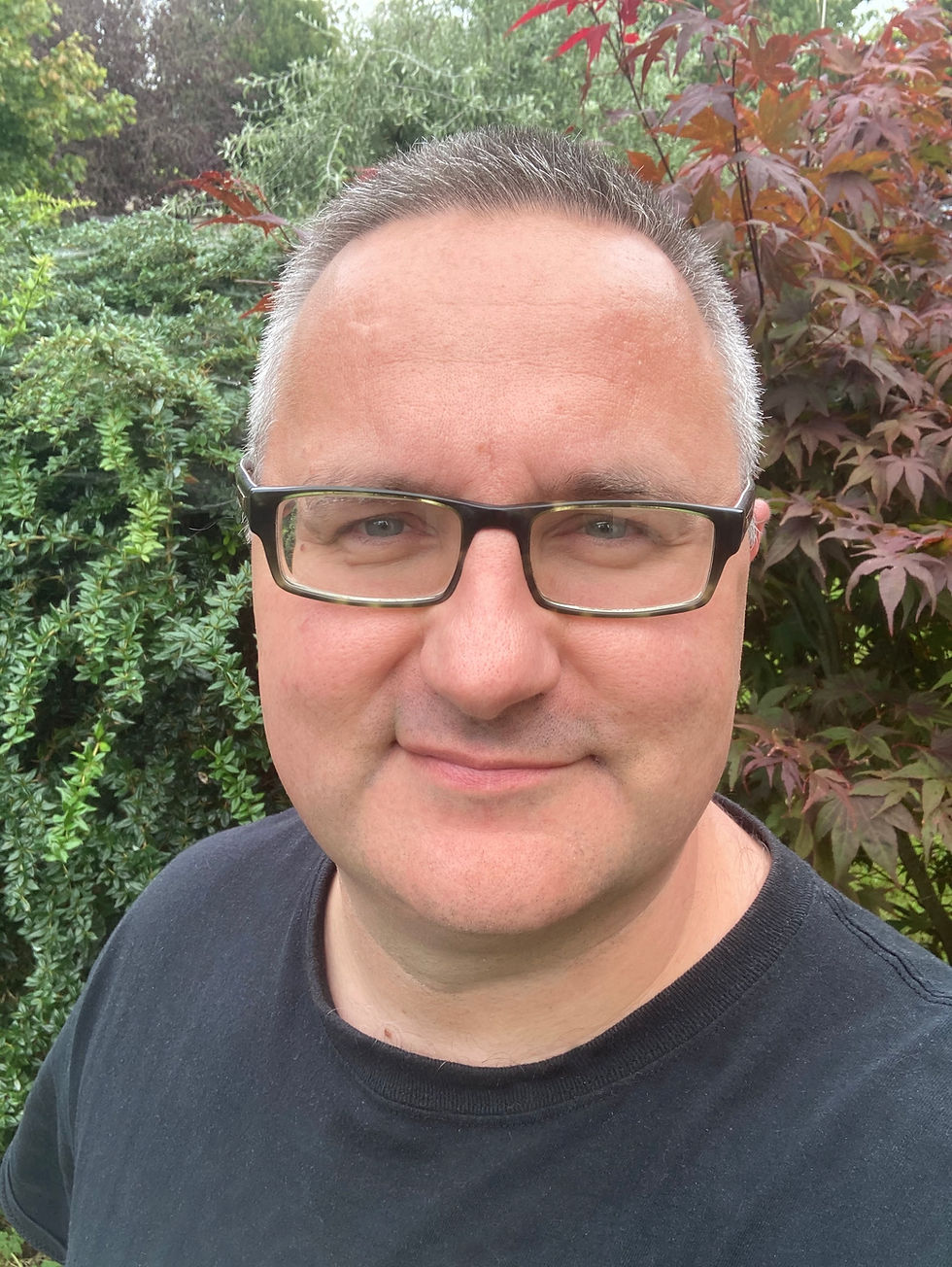
Oisín McGann was born in 1973 in Dublin, Ireland, and grew up there and in Drogheda, County Louth. He studied at Ballyfermot Senior College and then Dun Laoghaire School of Art and Design, before going on to work in illustration, design and film animation, later moving to London to work as an art director and copy writer in advertising.
Returning to Ireland in 2002, he has since become one of Ireland’s most prolific and best-known writer-illustrators, and has produced dozens of books for all levels of reader, including fourteen novels.
1. What inspires you?
Everything, really. One of the questions that writers and artists get asked all the time is, ‘Where do you get your ideas?’. The world is full of stuff that will give you ideas, you just have to look. You’re not born with a bucket of ideas that you’re going to run out of some day, there is an endless feed that you can tap into, you just need to be curious about the world around you. If it doesn’t come naturally, you can develop it as a skill: Look at the way two people act toward one another. Find something that looks out of place and wonder about it. Question where things come from and how they got here. Seek out things that affect people’s emotions. Your environment is full of things that can give you ideas if you take an interest and ask yourself questions about them.
2. How do I know what to do on the white paper?
This is a good question! Whether it’s writing or drawing, there are times when staring at that blank page can feel intimidating. Where to start? One of the most challenging things about creativity is that there are no clear rules, there’s no one way of doing things. The most important thing is just to DO SOMETHING! Whether it’s pencil, pen, or typing words, don’t get hung up on getting it right at the start, you can always go back and change it. Failure and making mistakes are a vital part of being creative, they help us learn and develop. Even if you don’t feel like you know what you’re doing at the start, or think it could turn out to be rubbish, make that start. Scribble, scrawl, write whatever you have in your head, get that first line down, make some marks on that blank page. You can always fix it or redo it later if you’re not happy with it.
3. What inspired you to try children's literature?
Because children’s books made me what I am. I’ve been reading my whole life, but the books and comics I read as a child and a teenager had a bigger impact on me than just about any that came afterwards. As a writer, you want to have an effect on your reader, and I thought if I could cast a spell over others the same way those writers and illustrators had cast a spell over me, that’d be a pretty cool way to live my life – and it is!
4. Do you only work in one medium?
As a writer, I’ve written for different age groups and reading levels in a range of genres. I’ve written historical fantasy like Ancient Appetites, a story about a very rich, very murderous family in nineteenth-century Ireland where there are living machines wandering around. I’ve written science fiction like Rat Runners, about teenage criminals in a surveillance state London. I’ve written historical fiction like Race the Atlantic Wind, about the first people to try and fly across the Atlantic. I’ve written a non-fiction book entitled A Short, Hopeful Guide to Climate Change. As an illustrator, I work in a range of styles, and I’ve used all sorts of media over the years. You can see my portfolio here. These days, I start working on my stories in notebooks and then type in an app called LibreOffice. I still draw with pencil and ink on paper, but I paint on a graphics tablet, in an app called Krita, which can mimic the effects of different art materials. Both of those apps are professional level, open source, and free to download.
5. How do I say I'm a good artist?
Start by just saying you’re an artist, which is what you are if you make any kind of art. It’s not the quality of the work that makes you an artist, it’s the fact that you do it that matters. The thing about any art form is that the more you learn about it, the more you realize there is so much else to learn, so you never stop. Ironically, the better you get, the more you end up questioning how good you are. This can cause what’s called ‘imposter syndrome’, where people feel a lack of confidence because they know how good they’d like to be, and don’t feel like they’re getting there, and don’t even deserve to be where they are. The key thing with this is to appreciate the skills you have, take joy in the process of doing whatever it is you do, and treat mistakes and failure as a means to improve your skills. Taking risks and experimenting is how you learn, so learn to enjoy them. You’re a good artist if you treat improving those skills as part of the job.
6. What is a bad drawing and what is an ok drawing?
You are the first judge of your work, so how well you’ve done something depends on how you feel about it. It could be that it’s not as accurately drawn as you wanted, but you still like it, or it could even be accurate, but you don’t think it feels right. Your feelings about it can change over time too, so that a drawing you liked originally might not look as good to you as you become more skilled. On the other hand, you could end up appreciating a picture you felt was all wrong because you learned something from it, or . . . you just like it. It’s really important to remember that if someone else is judging your work, their opinion is subjective too, which means that they might be judging it on how good it is, or on how much it appeals to their personal taste. And you can’t do anything about other people’s tastes.
7. What tips can you offer to aspiring book illustrators?
Illustration is, above all, a form of communication. Whether it’s really simple cartoons or fully painted, realistic illustrations, the main aim is to communicate thought, and for book illustrators, you will probably be helping communicate the writer’s thoughts. So, even more than being able to draw well, you must be able to show things clearly. Can you make your characters act out emotions? Can you stage a picture to demonstrate what’s happening in that part of the story? Can you show the reader something that they can’t read from the words on the page? Can you use shading or colour to change the mood, or use the angle of the viewer to alter how we’re thinking about the character? You have to think like a film director, and you are in control of every aspect of each image in the book or comic and how they relate to each other. Book illustration is also a trade first and an art second. You are working with other people to get a job done, and you’re getting paid for it. If you want to do this as a profession, you have to learn how to charge for your work, and learn the other skills you need to be self-employed and don’t have much to do with art! But crucially, you need to seek out the work you’ll enjoy most – that’s the way to achieve a long-term career.
8. What are common traps for new artists?
The biggest one, for writers and illustrators, is social media. In many ways, people coming into publishing now are far better formed, and often more professional, than I was when I started out. I’m that old that we didn’t have the web, let alone social media, when I first arrived on the scene. However, what you see and read online can give you a very distorted view of how publishing works. Listen to what professionals say, the ones you respect, when they’re talking about their own work, but be aware that there’s a lot of people out there who want to take advantage of inexperienced artists who are desperate to break in. Also, the type of work that gets a lot of attention online doesn’t always reflect the reality in publishing. If you want to get into comics or book illustration, you’ll see artists posting a lot of splashy pages online, with single heroic characters in dramatic poses. However, editors and art directors will more likely be looking for sequential art that shows your storytelling skills. You’re as likely to be drawing someone washing dishes or riding a bicycle as you are an elf fighting a dragon, so how do you make ordinary scenes look engaging for a reader? Even if you just want to draw in a cartoony or Manga style, learn to draw accurately, and these skills will translate into different areas as you need them. For writing, learn how to develop characters, setting, and plot and how they work together. Someone who truly understands storytelling can work in different genres and different areas of publishing. Something that’s very common now is that people are expected to pitch finished work to clients or publishers or produce work for free to show online to get themselves started. Breaking in can be a long slog, so you need to enjoy it, and focus on what you love. There will be so many things that will try and distract from that, but if you concentrate on getting good at what you do and finding ways to get paid for it, you can build a career on that.
9. What do you do when you feel stuck?
That depends on whether I’m working to a deadline, or it’s something I can take more time with. First of all, everyone gets stuck sometimes. Even the most experienced professional creative can hit a wall and be left unsure what to do next, but we can’t get worked up about it because we have a job to do. Maybe you just need to take a break and do something else for a while, or maybe you’re taking the wrong approach and you need to rethink how you’re doing things – deliberately do something you hadn’t tried before. Sometimes, if it’s just something you’re doing for yourself, you can decide if you want to put it away and come back to it another time, or write it off as an experiment that didn’t work out. If you learned something from it, it wasn’t a wasted experience. However, it’s best to get used to finishing things, so if you’re stuck, take a step back and ask yourself if it’s something you need just step away from for a while, or tackle in a different way, or make a new start on. Don’t keep butting your head against that wall, find your way around it. Maybe just ask yourself: ‘How do I make this more fun?’
10. What is the most valuable piece of advice you’ve been given about art?
I’ve learned it in various ways over the years, but even now, I keep having to remind myself on a regular basis: You are in this for the love of it. If you are not loving it, find something else to do. When you’re young and you’re starting out, it can feel like it’s taking ages to find what works for you, but write what you like, draw what you like. Do it because it’s fun, and you’ll do a lot of it, and you’ll end up getting a lot of practise, and experience. You will learn by having a good time. The more rigorous and challenging work can come later, when you feel ready for it. Whether you just want to keep doing it for the enjoyment of it, or you want to make a career of it, figure out what it is you love about it, find the joy, and hold on to that. The rest is just knuckling down and getting stuff done. Best of luck!
Oisín, we can't thank you enough for sharing such fantastic advice for our artistic audience! Please follow Oisín on social media, check out his art portfolio, and read about his novel, The First Fire of Halloween, in our Bookshop. Keep shining!

Author/Illustrator Website: http://oisinmcgann.com/


Comments